

Herbal reference
Herbal Ingredients in Men's Supplements, Explained
Maca, saw palmetto, and tongkat ali appear on label after label, often with little explanation. This reference covers what each botanical is, how it's usually sold, and how to read it on a product page.
See which botanicals make the popular products shortlistWhat we check in every listing
- Botanical name, spelled the same way twice check 1
- Extract type and specification check 2
- Amount per capsule or serving check 3
- Single botanical or a blend check 4
- Capsule shell, if you avoid gelatin check 5
Botanical A
Maca
Maca is a root from the high Andes, sold as a powder or, more commonly in men's products, as a capsule. It usually sits in the energy and endurance supplements part of a shelf, and it turns up in both single-ingredient jars and larger blends.
The Vitamin Shoppe's Black Maca is framed around energy and vitality support and comes in vegetable-capsule form. GNC's Maca Root 525mg uses a standardized milligram dose, which makes it easy to compare against other single-ingredient options — you can put two labels side by side and see the difference in one line.
On a label, look for the maca form (black, red, yellow) and the amount per capsule. If a product says only "maca root" with no colour, no extract ratio, and no milligram figure, you have nothing to compare — that is not a red flag on its own, but it is a dead end for research.
- Typical format
- Vegetarian capsule or loose powder
- What the label shows
- Root colour, extract type, mg per capsule
- Common positioning
- Energy and endurance support
- Also seen as
- A supporting botanical inside a blend
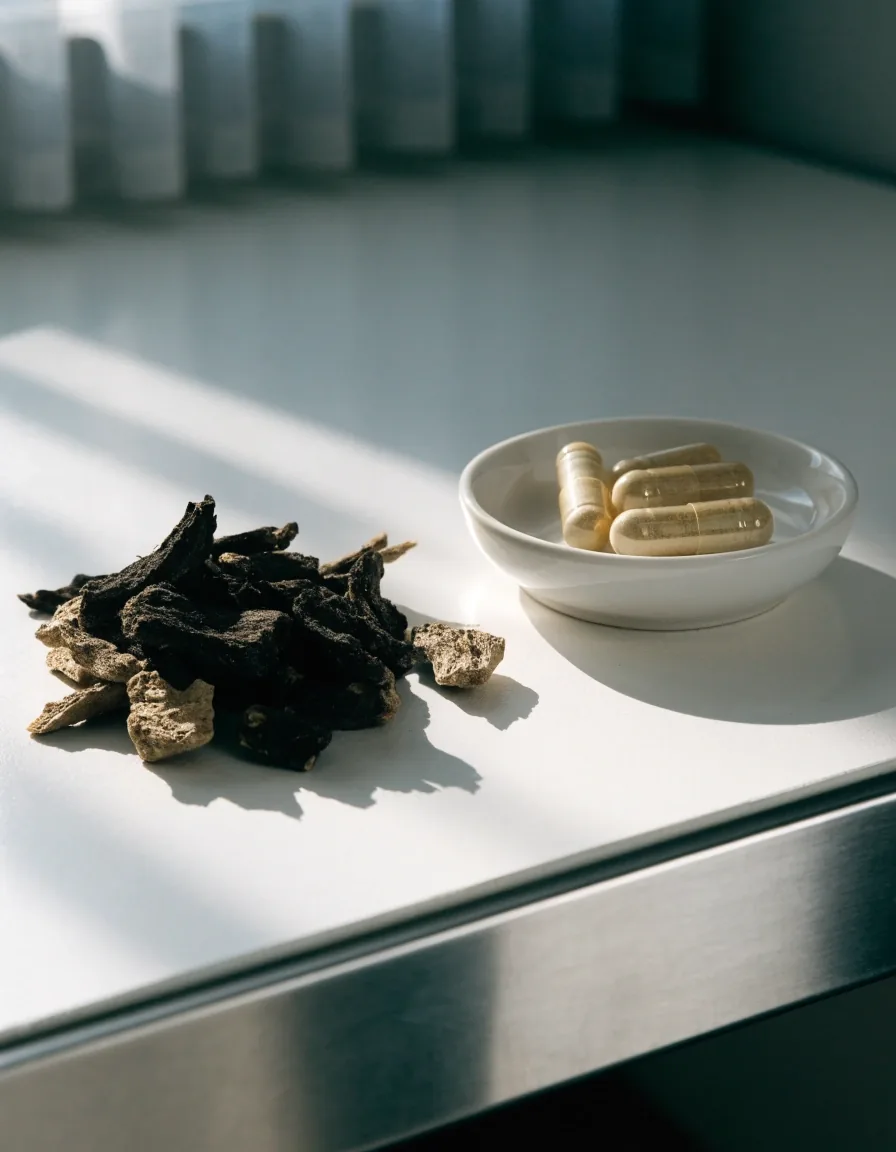

Botanical B
Saw Palmetto
Saw palmetto is one of the oldest botanicals in men's supplement retail. The Vitamin Shoppe sells a saw palmetto berries product in capsule form inside its men's health assortment. It usually appears as a berry extract with a stated ratio or milligram amount, and it's often combined with other botanicals in men's formulas.
If you're comparing saw palmetto products, the extract ratio and the amount per capsule are the numbers that matter. A berry extract listed at a specific ratio tells you roughly how concentrated the raw plant material is; a listing that gives only the herb name without a figure leaves you nothing to compare.
- What you will see on shelf Berry extract, ratio or mg stated ratio first
- Common format Vegetarian capsule, sometimes softgel capsule
- Where it usually sits Men's health support range assortment
- If the label is vague Blend with no per-herb amounts skip it
Botanical C
Tongkat Ali
Tongkat ali is a Southeast Asian root that has become a fixture in men's wellness products. In Indonesia it sits next to imported brands in the same aisle, which makes the label differences easy to spot if you are standing in the shop.
The Vitamin Shoppe's Tongkat Ali LJ100 uses a branded extract, which is a way brands signal a consistent raw material. It's sold as a capsule and appears next to other vitality and energy products.
Why branded extracts matter
Branded extracts are worth noting because they usually come with a defined extract specification, which makes label comparison easier than a generic "tongkat ali root" listing. When two products carry the same branded name, you can reasonably assume the raw material specification is the same, and the difference sits in the amount per capsule and the number of capsules per bottle.
What to look for
The extract's own name, not just "tongkat ali".
Why it helps you compare
Two jars with the same extract name can be lined up by amount and price per capsule.
Where it fits
Next to other natural capsules for strength and vitality on the shelf.
Where it doesn't
Inside a blend where the herbal count is hidden behind a single "proprietary" figure.

Why these three dominate the shelf
Maca, saw palmetto, and tongkat ali are widely recognized, easy to capsule, and fit a natural framing that shoppers already trust. They travel well: they ship as powders, they tolerate long shelf life, and they appear on the label in a form most people can read without a glossary.
Retailers reinforce this. Guardian Indonesia's men's health category mixes imported brands and local-style herbal formulas, and maca, saw palmetto, and stamina-positioned items all appear there. The result is a category where the same few names repeat. Familiarity isn't a quality signal, but it does make comparison easier — you can walk along a shelf and see the same three names again and again.
Where you will cross them
- Import-brand aisle
- Local herbal formula shelf
- Single-ingredient capsule jars
- Multi-herb blends near the till
Extract type and dosage format
Botanicals come as powders, standard extracts, and branded extracts. A branded extract names its raw material and specification; a generic listing may not. Dosage format matters too: a standardized milligram capsule gives you a fixed amount, while a blend may hide it.
When two products use the same botanical, the extract type and milligram amount per serving are the two lines worth reading first. Everything else on the label is context.
- Branded extract
- Names its raw material and defined specification
- easiest
- Standard extract
- Gives a ratio or a standardized figure
- straightforward
- Plain powder
- Names only the dried, ground herb
- mg only
- Blend, no amounts
- One combined figure, no individual per-herb numbers
- stop here
Vegetarian capsules and other formats
Many botanical products now ship in vegetarian capsules, including The Vitamin Shoppe's Black Maca. That's useful if you avoid animal-derived gelatin. The nutrient or extract inside is the same either way; the capsule shell is a preference, not a quality tier.
Tablets and powders exist too, but capsules remain the most common format for single-ingredient botanicals because dosing is straightforward. Powders are the cheapest per gram and the most awkward to take; tablets can be larger and harder to swallow but often carry a longer ingredient line.
Format and what it costs you
- Vegetarian capsule easiest daily
- Gelatin capsule common default
- Tablet more fillers
- Loose powder needs a scoop
How to compare two herbal products
Line up four things: the botanical name, the extract type, the amount per serving, and the number of servings per container. If a product lists a blend without individual amounts, set it aside. If both products name their extract and give amounts, choose based on which botanical fits your goal and which format you'll take daily. That's the whole exercise.
- Botanical name. Same plant on both labels? If one says "maca root" and the other says "maca extract", they are telling you different things.
- Extract type. Branded, standardized, or plain powder. The more specific the description, the easier it is to trust the figure beside it.
- Amount per serving. A single number you can read at a glance beats a blend figure every time.
- Servings per container. The most practical number in the whole exercise — how long the jar actually lasts you.
If you would rather see the botanical list side by side, the popular products page groups single-ingredient capsules the same way.
Read the label with a short list, not a long story
If a botanical extract has a name and a number, you can compare it. That single habit covers maca, saw palmetto, tongkat ali, and every other herbal blend you meet on a men's health shelf.
Where this sits next
From a single botanical back to a daily routine
A herbal ingredient is one line on a label; the rest of a men's vitamin supplements shelf is vitamins and minerals for men. If you have read this far, the useful next step is understanding how a daily multivitamin and a single botanical sit together in a healthy lifestyle products routine — and which one earns a place on your shelf first.
Editorial contact
If a label term on this page is still unclear, write to us and we will cover it in a future reference update. We answer emails Monday to Friday, 09:00–18:00.
- [email protected]
- Phone
- +62 24 3593 866
- Address
- Jl. Pemuda No. 150, Sekayu, Semarang Tengah, Semarang 50132
This page is ingredient information for natural supplements for men. It is not medical advice and does not replace a conversation with a qualified professional.